01
Autonomous flight
An advanced autopilot flies CUPID on its own, from take-off to mission.

CUPID · since 2024
A research project born in 2024 together with the LiftUP team: solar cells inside the wing, to stay airborne for hours without recharging.
CUPID, Composite Unmanned Photovoltaic Innovative Drone, is a University of Padua student project: a composite drone with photovoltaic panels built into its structure, to stretch flight time far beyond traditional electric drones.
It wasn’t built for a competition. It’s a modular experimental platform: a flying lab to test materials, energy layouts, solar-cell integration techniques and energy-management systems.
Real missions can be built on it: environmental monitoring, civil protection, wildfire spotting with infrared sensors and, in general, anything that needs a light, autonomous aircraft able to fly for a long time.
First prototype goal
The first prototype is there to understand solar cells in flight. Perfect aerodynamics can wait: it needs a solid structure to mount them on and measure everything.
How it works
Energy follows a single path, and every part must waste as little as possible.
Light
The light falling on the wing, all through a daytime flight.
In the wing
SunPower cells built into the wing structure: about 40 to start with.
MPPT
Always draws the maximum power from the cells, whatever the light or angle.
Output
Energy spins the propeller; the surplus charges the battery.
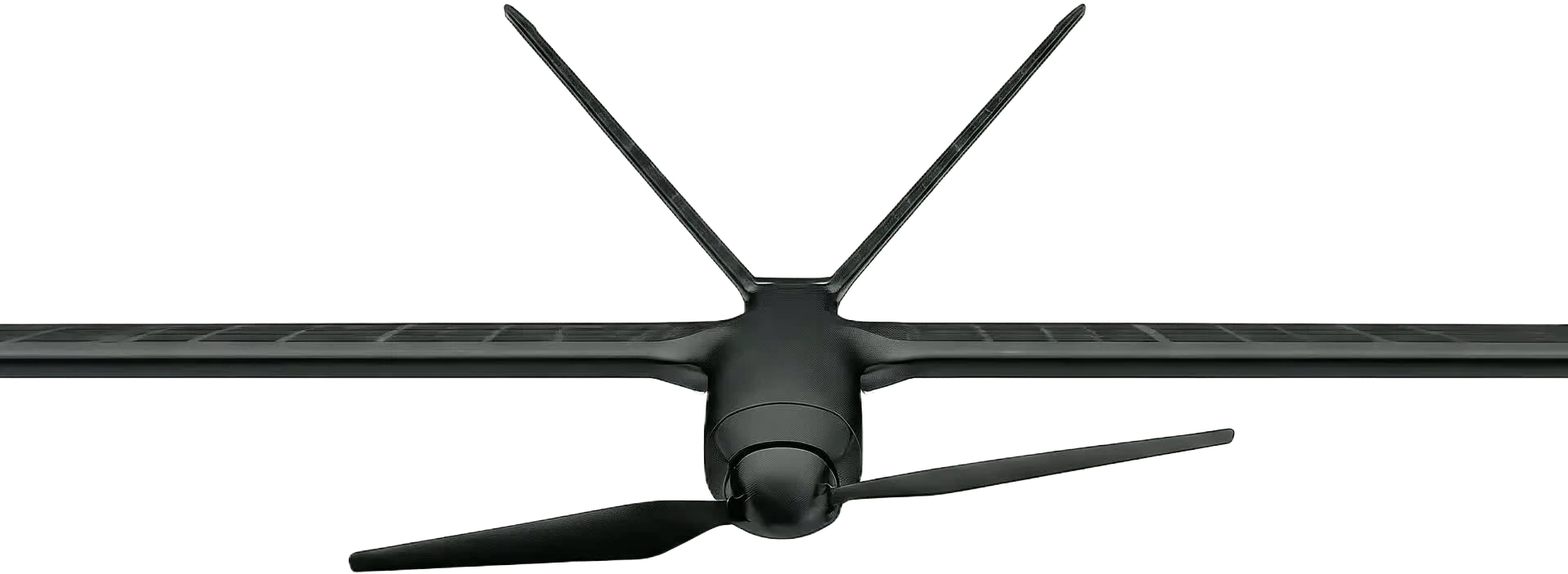
The CUPID concept: solar cells run along the whole wing.
Final goal
01
An advanced autopilot flies CUPID on its own, from take-off to mission.
02
High-efficiency solar cells in the wing produce and manage the onboard energy.
03
Many times the endurance of a normal electric drone.
04
A modular platform: infrared, cameras, LiDAR, research instruments.
An aircraft that stays up for hours becomes a base for any instrument: infrared sensors against wildfires, cameras for environmental monitoring, LiDAR, research equipment. CUPID is the demonstrator that takes us there.
Technical challenges
Every technical choice affects the others: the system has to be designed as a balance between weight, energy efficiency, aerodynamics and reliability.
More cells produce more power, but they add weight and drag; and more weight needs more energy to stay airborne. The goal is the point where the energy produced exceeds what it takes to carry the extra weight: a loop to solve with models, simulations and tests.
The motor must fly on the least possible energy, stay light, match the propeller and the voltage range of panels and battery. Propeller diameter, pitch and material set the efficiency: it needs a prop built for low RPM and maximum efficiency.
An MPPT (Maximum Power Point Tracker) always draws the maximum available power, whatever the aircraft’s angle, the clouds or the cell temperature. The candidate is the Genasun GV-5, compact and efficient for low-voltage systems: the final choice depends on how many cells we use and how we wire them.
The first prototypes will have a polystyrene core and a fibreglass skin: light, stiff enough and easy to modify. Carbon fibre comes later. The material decides where the cells go, how weight is spread, how much load the wing takes and how much room is left for electronics and sensors.
The first payload is an infrared camera, easy to integrate and inexpensive. Every sensor brings power draw, weight, centre of gravity, interference and drag: that’s why the airframe is designed from day one to grow, without a full redesign.
What comes next
To get real data straight away, the first solar cells are tested on Zephira, a proven drone from our fleet. Then digital model, prototype, first flight and continuous improvement.
2024
CUPID starts as an internal LiftUP research platform to study the endurance of electric drones with built-in solar panels. The first ideas take shape.
2025
Analysis of wing surfaces and solar layouts, a first CAD model with geometry, internal volumes and component layout. The first electronic parts are bought for testing.
2026 · Q3
First solar cells on the wing of Zephira, one of the fleet’s working drones: in-flight MPPT tests under real sun and vibration, data on energy produced and aerodynamic impact.
2026 · Q4
From the Zephira data, the final CUPID 3D model: the right balance between a wide wing, which hosts the cells, and overall efficiency. Then the choice of avionics, motors and the first payload, with the infrared camera.
2027 · Q1
The first real aircraft: polystyrene core and fibreglass skin. On board: solar panels, MPPT, BMS, battery, flight controller and motor-propeller unit.
2027 · Q1
Short flights first, for stability, handling and battery endurance; then longer and longer flights, towards six hours aloft.
From 2027
A carbon structure for a better power-to-weight ratio, infrared cameras and precision sensors: environmental monitoring, infrastructure inspection, search and rescue.
Supporting CUPID